Osaka Day Tours
I’m Serious Day Tour Man AI, your day trip expert. Ask me anything — where to go, how to get there, and what’s actually worth your day.
Osaka is the Kansai region’s best base, overshadowed by Kyoto’s fame. It sits closer to Nara’s deer and Himeji’s castle than Kyoto does, runs cheaper on hotels, and eats better by national consensus. The routing advice is simple: sleep and dine here, day-trip everywhere.
The options include one destination unlike anywhere else in Japan — a mountaintop monastery town where the day trip is good and the overnight is transformative — plus a maple-forest waterfall thirty minutes from the neon, and the two most famous names in the region within an easy hour.
Here’s what’s worth a day, with real times and honest trade-offs.

Popular Day Trips
Himeji
The 30-Minute Shinkansen, the Numbered Tickets
Kōyasan
The Nankai Line, the Cable Car
Kobe
The Lunch-Price Beef Rule, the Free Waterfall
Minoo
The Maple Gorge, Fried Maple Leaves
Nara — Closer Than You Think
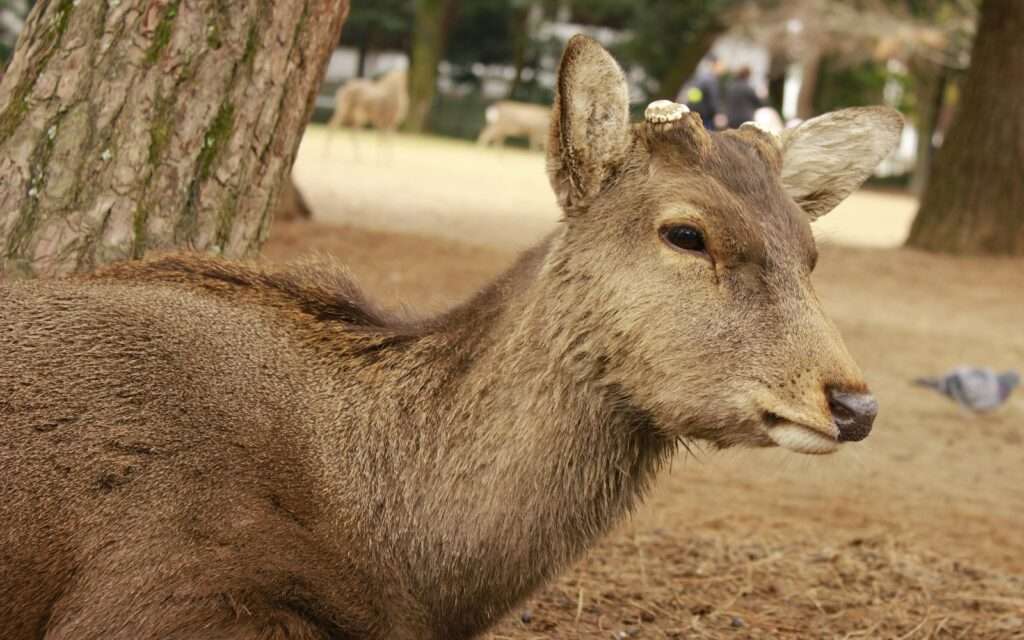
Correct the routing first: Nara is thirty-five minutes from Osaka on the Kintetsu line — closer than it is from Kyoto, whatever the itinerary templates assume.
The essentials: about 1,200 bowing sika deer roam the park. Buy the official crackers, return the bows, and show flat empty hands to end negotiations. Todai-ji’s Great Buddha sits in one of the largest wooden buildings on earth. Kasuga Taisha’s approach runs through a forest of stone lanterns, and the arcades near the station stage mochi-pounding at performance speed.
The Osaka-specific upgrade: the Kintetsu limited express is comfortable enough that half-day Nara plus an Osaka evening works as a single day — deer at nine, Great Buddha at eleven, Dotonbori by seven. No caveats on this one. It’s the region’s essential.
Kyoto — The Reverse Commute
Kyoto is fifteen to thirty minutes by train. It works as a day trip with one discipline: pick one district per visit. The classic failure is the ten-temple sampler.
By district: east means Kiyomizu-dera at opening, the Higashiyama lanes, and Gion with its posted etiquette rules. Northwest means Kinkaku-ji plus Ryoan-ji’s rock garden. South means Fushimi Inari at dawn — and the early departure from Osaka actually helps, because the Keihan line puts you at the torii gates before the crowds staying in Kyoto have finished breakfast.
The full honesty: Kyoto rewards nights. The temple dawns and lantern-lit dusks are for people sleeping there, so the ideal Kansai itinerary splits the stay between both cities. But as day trips go, this is among the world’s best, and it repeats well: three Kyoto day trips from Osaka beat one exhausted Kyoto marathon.
Himeji & Kobe — The Western Line
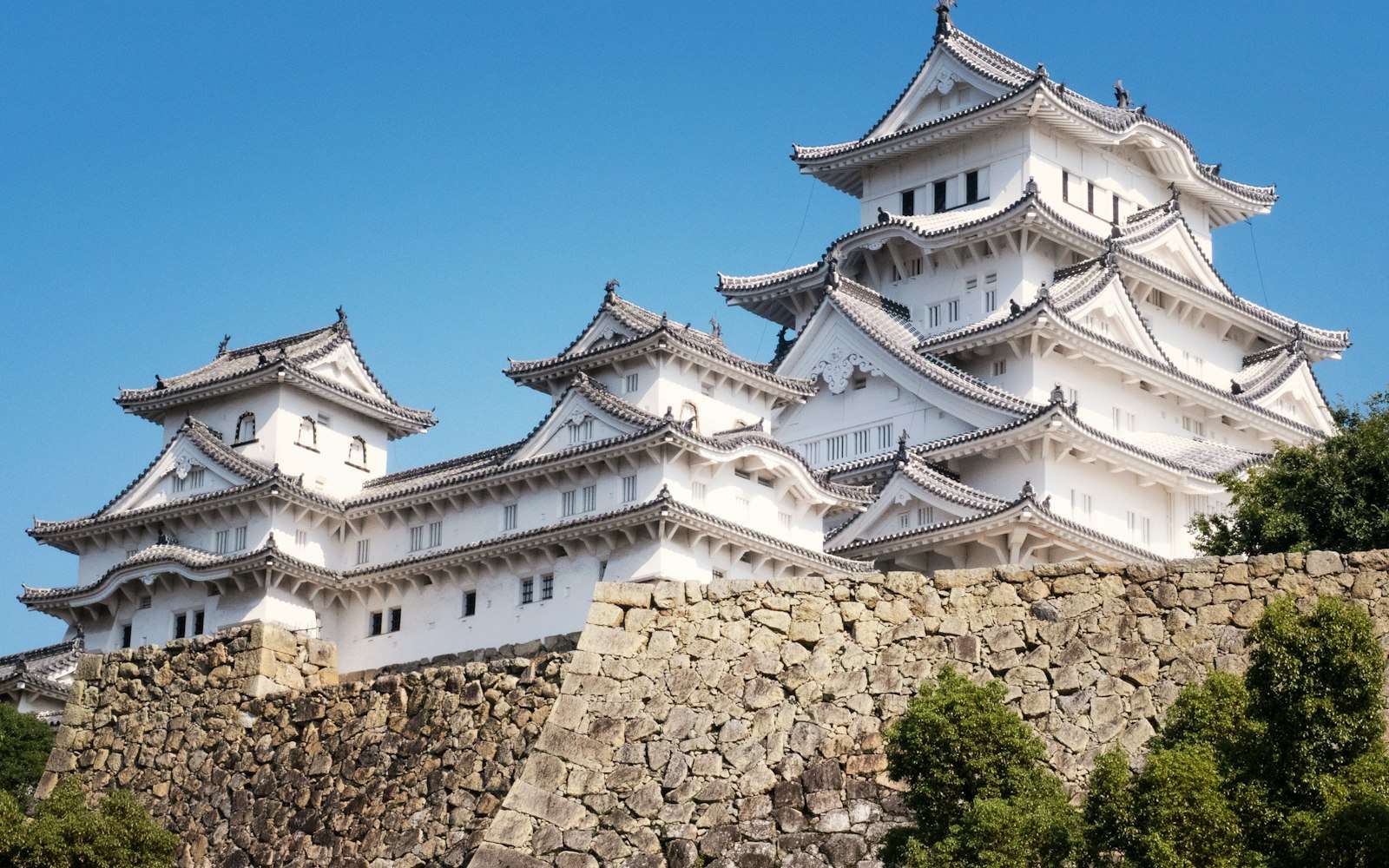
Himeji-jo is Japan’s great original castle — never burned, never bombed, bare wood and maze-gates intact — and it’s thirty to forty minutes from Shin-Osaka by shinkansen. One authentic castle beats every concrete reconstruction in the country, including Osaka’s own. Two facts for 2026 planners: admission rose in March to ¥2,500 for non-resident adults, with under-18s now free, and there’s no reservation system — when it’s crowded you queue for the keep, so go early. Two to three hours in the keep and the neighboring Koko-en gardens make the morning.
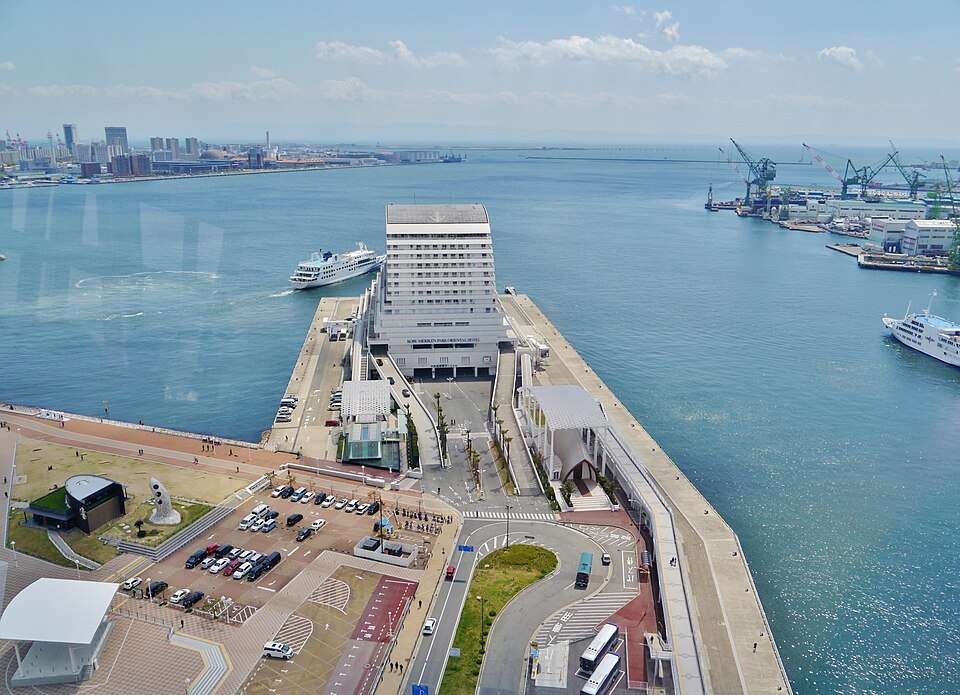
Stop in Kobe on the way back, twenty minutes from Osaka, for the beef facts: real Kobe beef is a certified appellation served at certified restaurants, teppanyaki lunch sets serve the same cattle at half the dinner price — the lunch move is the whole strategy — and most “Kobe-style” beef abroad is fiction. Round out the day with the Nunobiki Herb Garden ropeway above the city, or Arima Onsen behind Mount Rokko — one of Japan’s oldest hot-spring towns, gold and silver waters included — which turns the return leg into a soak.
Castle, beef, bath: the best-engineered full day in the region.
Read the full Himeji day-trip page.
Read the full Kobe day-trip page.
Koyasan — The Mountain Monastery
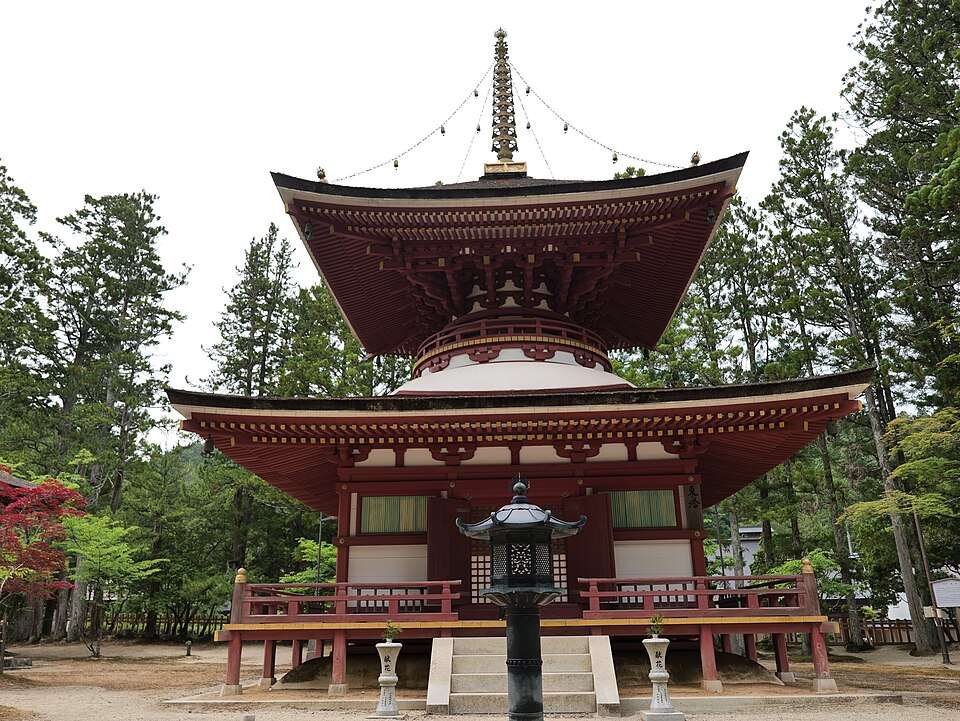
Mount Koya is two hours south by the Nankai line and funicular, and it is the most profound trip in the region: the mountaintop headquarters of Shingon Buddhism, founded by Kobo Daishi in 816. A monastic town of a hundred temples sits in a cedar bowl, anchored by Okunoin — the cemetery where two hundred thousand graves line lantern-lit paths through primeval cedars to the mausoleum where, the faithful hold, Kobo Daishi sits in eternal meditation. The monks still carry his meals twice a day, twelve centuries on.
The day trip works: Okunoin, the Danjo Garan pagoda complex, and Kongobu-ji’s rock garden fit between the trains, and Nankai’s Koyasan World Heritage Ticket bundles the round trip, the funicular, and the mountain buses for about the price of the bare fares. But the overnight is the transformation. Temple lodgings host guests for shojin ryori vegetarian dinners and morning prayer services, and Okunoin after dark or at dawn — lanterns lit, crowds gone — is something day-trippers cannot see.
Go for the day without guilt if that’s the itinerary. But if any night in your trip is movable, this is where it belongs.
Read the full Koyasan day-trip page.
Minoo Park — The Waterfall Sleeper
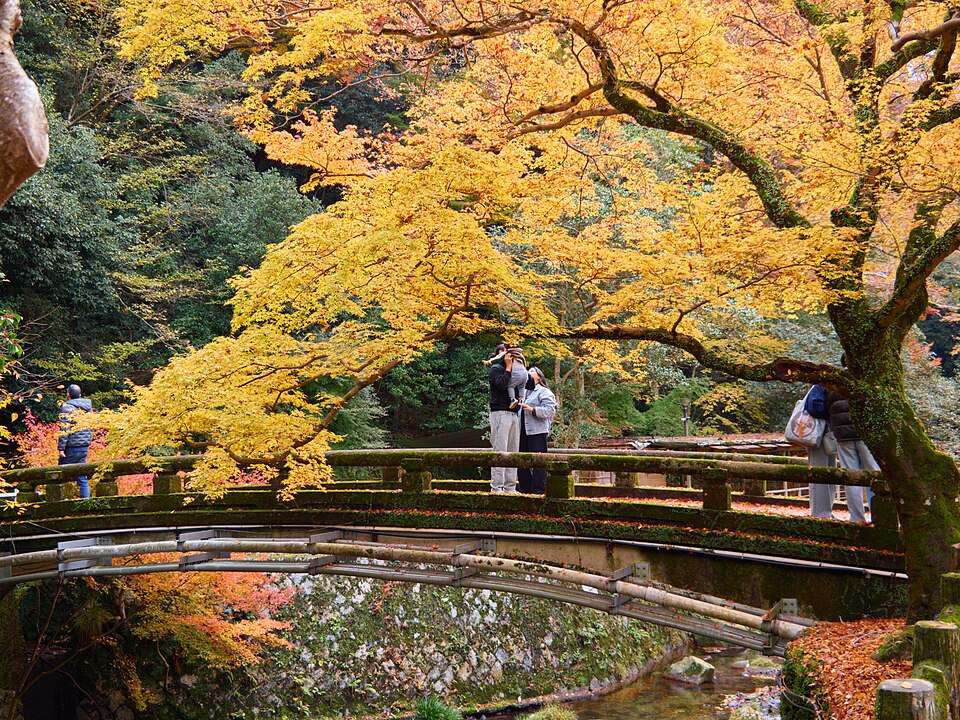
Minoo Park is thirty minutes north on the Hankyu line. It’s the recovery day. A gentle 2.8-kilometer paved trail runs from the railhead through maple forest to a 33-meter waterfall — Osaka’s oldest escape, a Meiji-era resort valley with an insect museum and a temple decorating the walk.
The signature is edible: momiji tempura, maple leaves battered and fried sweet-crisp, sold by vendors along the trail. The tradition runs back centuries and is exactly as pleasantly strange as it sounds.
The seasonal math: November’s foliage makes the valley one of Kansai’s great autumn corridors, with crowds to match — weekday mornings win. Summer offers cool shade and the occasional monkey; keep bags zipped, because the troop knows the vendors’ schedule. The whole outing runs a half day door to door, and it’s the lowest-effort genuine escape from the city — the right move between eating campaigns.
Read the full Minoo day-trip page.
Dotonbori, the Kitchen & Osaka Itself
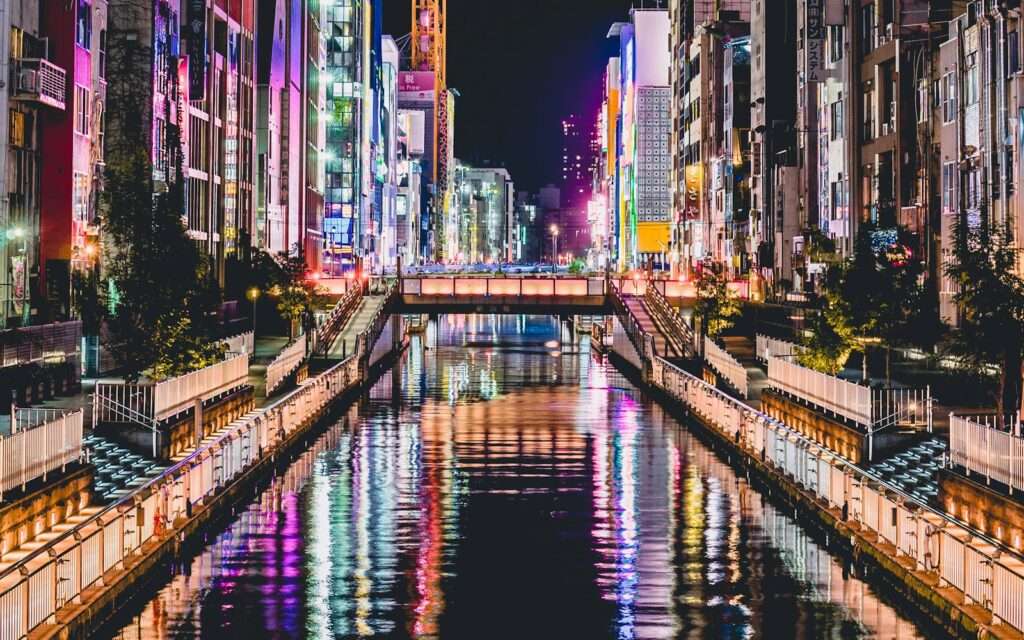
Osaka’s monument is dinner, so order the eating properly. Takoyaki from the competing Dotonbori institutions — the molten first bite burns everyone; it’s a rite. Okonomiyaki done Osaka-style, eaten off the griddle where offered. Kushikatsu in Shinsekai under the Tsutenkaku tower, with the no-double-dipping rule observed as scripture. Kuromon market for the morning graze — uni, wagyu skewers, and fruit priced like jewelry, best handled in tasting portions. The depachika basement food halls make the finale. The local verb is kuidaore — to eat yourself to ruin — and making the attempt is the point.
The rest, sorted honestly. Osaka Castle is best from the park: the 1931 concrete interior with its elevator is a museum, not a castle, and Himeji forty minutes west is the real thing. The Umeda Sky Building’s floating garden observatory takes the dusk panorama. Shinsekai supplies the retro-neon hour. Universal Studios Japan is flagged for what it is — a full separate day, world-class by theme-park standards, with Super Nintendo World’s timed entry as its own booking discipline.
Two culture notes. Hanshin Tigers baseball at Koshien, Japan’s oldest stadium, is the local religion in season, and the fan choreography outranks the game. And Osaka is loud, unpolished, and warmer to strangers than anywhere else in Japan — travelers who found Kyoto composed to the point of distance tend to exhale here.
Frequently Asked Questions
Is Osaka or Kyoto the better base for Kansai?
Osaka for logistics, hotel value, and food — it’s closer to Nara and Himeji than Kyoto is. Kyoto for temple dawns and evenings. The ideal split stays in both; the budget answer sleeps in Osaka.
Where do you eat real Kobe beef?
In Kobe, twenty minutes away, at certified restaurants — and at lunch, when teppanyaki sets serve the same beef at half the dinner price. Most “Kobe beef” abroad is neither.
Can you visit Koyasan as a day trip from Osaka?
Yes — two hours each way for Okunoin’s cedar cemetery and the temple complexes, with Nankai’s World Heritage Ticket covering the trains, funicular, and mountain buses. But the overnight in temple lodgings, with dawn prayers and the lantern-lit cemetery after dark, is the version worth rearranging a trip for.
What is Minoo Park known for?
A gentle forest walk to a 33-meter waterfall, thirty minutes from downtown — famous for November foliage and momiji tempura, the fried maple leaves sold along the trail.
Is Osaka Castle worth visiting?
The park and exterior, yes — the interior is a 1931 concrete museum with an elevator. For the real thing, Himeji is forty minutes west; admission rose to ¥2,500 in March 2026, and under-18s now enter free.