Kobe by Train
Thirty minutes west, the port city runs its famous beef at honest lunch prices, keeps a waterfall ten minutes behind a bullet-train station, and preserves one stretch of broken quay exactly as the 1995 earthquake left it.
The short version
- Three rail systems run Osaka to Kobe’s Sannomiya hub in 20–30 minutes at metro constancy — JR fastest, Hanshin and Hankyu cheaper by a coin — making this Kansai’s easiest add-on city.
- The beef rule per the alarm is the day’s architecture: certified Kobe beef teppanyaki houses sell lunch courses at a fraction of dinner pricing for identical grades — booking the counter seat for noon is the whole trick, and the certification plaque at the door is the authenticity check.
- Nunobiki Falls drops in tiers a ten-minute signed walk behind Shin-Kobe’s shinkansen platforms — free per the alarm, poem-carved, and the country’s most accessible serious waterfall; the Nunobiki Herb Gardens’ ropeway climbs the same valley for its ticketed panorama version.
- Kitano’s slopes keep the ijinkan — the Meiji-era foreign merchants’ houses in their hillside quarter — toured individually or by combination ticket, with the neighborhood’s café register as the real exhibit.
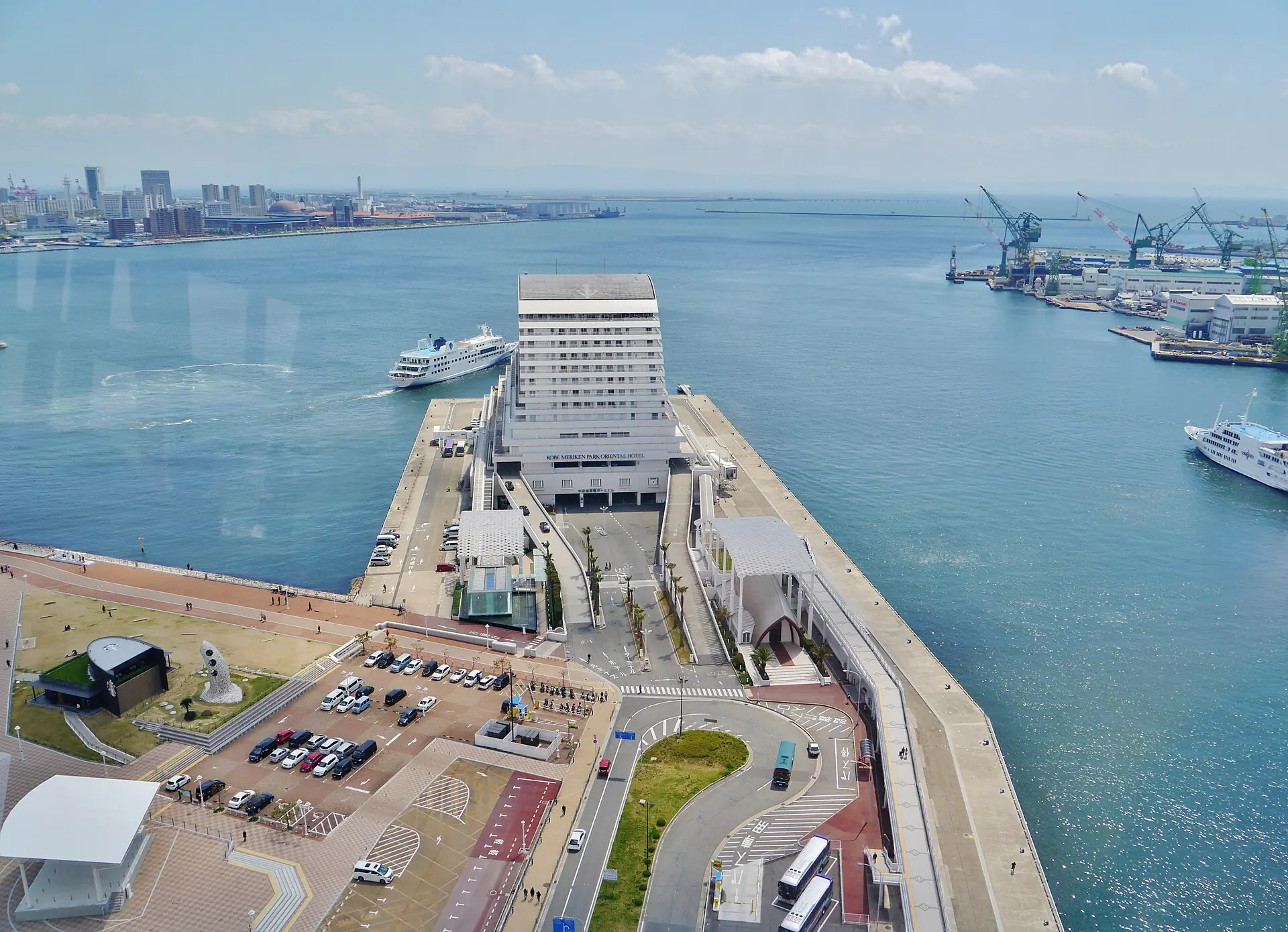
- The Port of Kobe Earthquake Memorial Park at Meriken Park preserves the alarm’s quay: a section of harbor wall left tilted and cracked exactly as the Great Hanshin earthquake dropped it in January 1995 — 6,400 lives lost citywide — kept plainly lit beside the rebuilt waterfront it explains.
- Nada’s sake district east of center runs brewery museums with free-to-cheap tastings (the working breweries’ shops pour the serious flights), and Nankinmachi’s Chinatown handles the street-snack interval.

Getting there
The three-line redundancy makes Kobe a whim — Sannomiya lands you in the center, Shin-Kobe serves the waterfall-first plan, and the day needs exactly one booking: the alarm’s noon beef counter, made days ahead for the famous rooms and same-morning for the merely excellent ones. The city runs north-south between mountains and harbor on walkable terms, with the City Loop bus stitching the corners for the tired.
The day
Waterfall first per the geography: Shin-Kobe’s back exit, the signed path, and Nunobiki’s tiers at morning quiet — ten minutes from a bullet train to a poem-carved cascade remains one of urban Japan’s best jokes. Descend through Kitano for the ijinkan hour — two or three houses by taste, the Weathercock House’s silhouette, the café stop the hillside enforces. Then the alarm’s centerpiece: the noon teppanyaki counter, the certificate on the wall, the chef working the cuts through their ceremony, and the bill reading like a misprint against dinner’s. The afternoon walks it off toward the water: Nankinmachi’s snack gauntlet, Meriken Park’s rebuilt harborfront, and the memorial quay’s tilted stones taken at the minute the alarm assigned — the 1995 date, the lamppost frozen mid-lean, the rebuilt skyline behind making the argument. Nada’s sake museums close the loop eastward with tastings that improve the train home; the Luminarie’s December light memorial reorders the whole evening in its season.
When to go
Kobe runs year-round on its indoor-outdoor split — the falls and harbor in any season, the beef counters climate-controlled by definition. December brings the Luminarie, the illumination festival born as a memorial to the earthquake’s dead, which fills early-winter evenings at full civic seriousness and full crowds. Cherry season dresses the Kitano slopes; summer adds harbor-beer terraces. The lunch rule per the alarm is seasonless — the price gap between noon and night never takes a holiday.
Frequently Asked Questions
Is the lunch beef really the same as dinner?
Same certification, same grades, smaller portions and simpler courses — the discount buys format, not quality. The certified houses display the bronze statue plaque and the certificate; ordering the mid-tier set at a counter seat is the connoisseur consensus. Dinner buys ceremony; lunch buys the beef.
How does Kobe beef certification actually work?
Tajima-strain cattle raised in Hyōgo prefecture, graded past strict marbling thresholds, tracked by individual ID — ‘Kobe beef’ is a certification, not a style, and the ID number on your certificate traces the animal. Anything without the paperwork is wagyu wearing a famous coat.
Is the earthquake memorial heavy going?
It’s brief and plain by design — one preserved quay section, dated markers, and the rebuilt city as its own exhibit. The register is civic memory rather than museum grief, per the alarm’s framing; the fuller story lives at the Disaster Reduction institution for those who want the hour.
What’s worth it in the herb gardens?
The ropeway’s harbor-and-mountain panorama and the terraced gardens justify the ticket on clear days; the falls below remain free regardless, per the alarm. Sunset rides time best — the harbor lights complete the argument.
Kobe or Himeji from Osaka?
Himeji (documented on this network) for the castle — Japan’s finest, full stop; Kobe for the eating-and-harbor day. The same corridor serves both, and the ambitious pair them: castle morning, beef lunch, harbor evening. As single days, castle pilgrims go west, appetites stop short.