The Cable Car to Koyasan
A monastic town at 800 meters, reached by train and cable car. The day trip works; the temple night is the point.
The short version
- Nankai trains run from Namba to Gokurakubashi in about 90 minutes, where the cable car climbs the last pitch in five; buses cover the road into town — walking that road is prohibited. Tickets at nankai.co.jp.
- The Koyasan World Heritage Ticket bundles the round trip, the mountain buses, and entry discounts — the standard buy for a day visit.
- Okunoin is the heart: a two-kilometer approach through 200,000 graves and memorials under giant cedars to the mausoleum of Kobo Daishi. Photography stops at the Gobyobashi bridge; so should conversation.
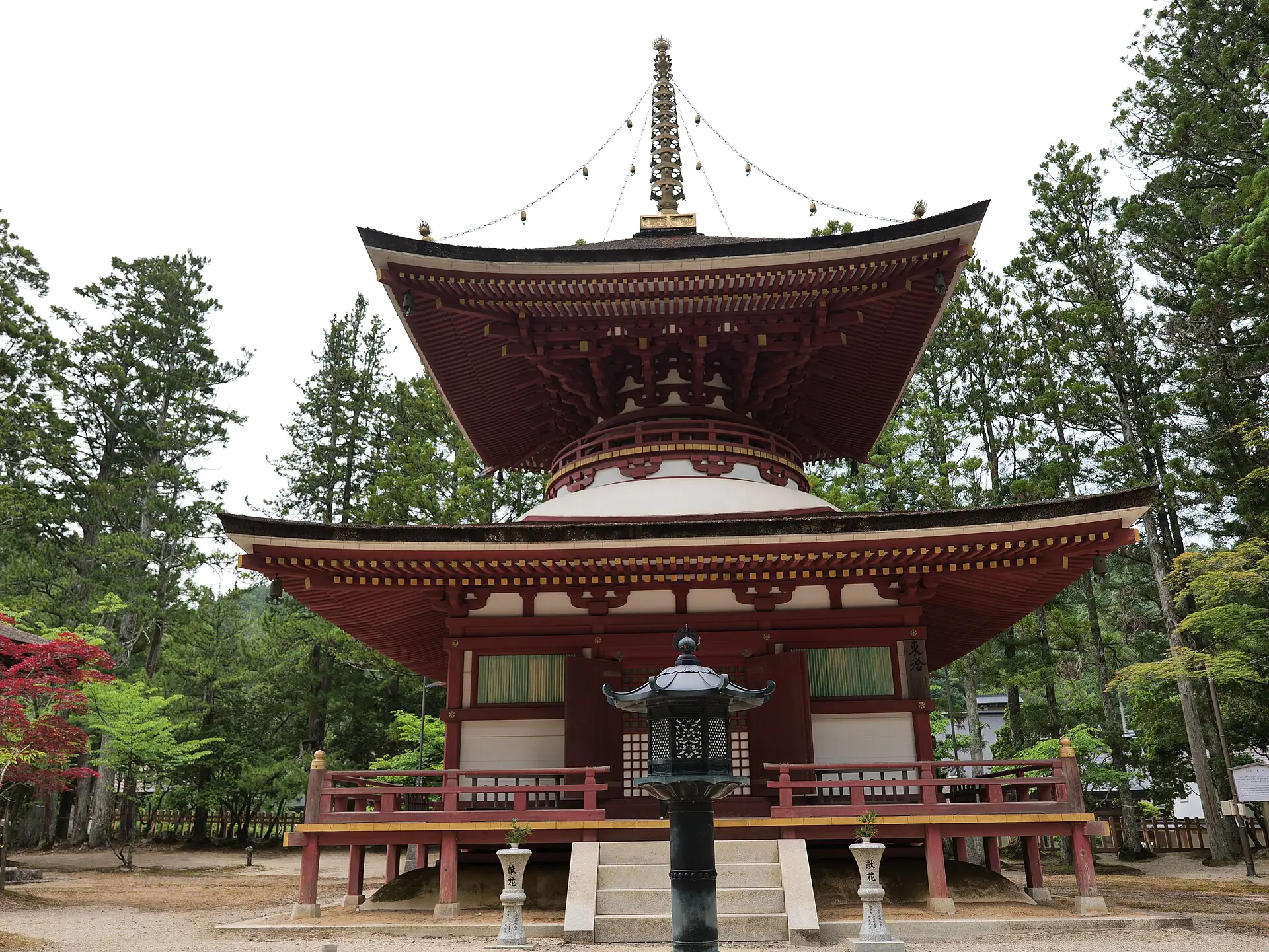
- Danjo Garan’s vermilion Konpon Daito pagoda and Kongobuji temple with its rock garden fill the town’s other half; sect information at koyasan.or.jp.
- Lunch is shojin ryori — the monks’ vegetarian kitchen — at temples and small restaurants through town.
- Fifty-plus temples take overnight guests: dinner, morning prayers, and Okunoin after dark. The day trip is the preview; the shukubo night is the film.

Getting there
From Namba, Nankai’s limited express and ordinary trains climb into the Kii mountains to Gokurakubashi — the last stretch of track is itself a slow scenic argument for the trip — then the cable car lifts you to the mountain station, where buses run the forbidden-to-walk road into town. The World Heritage Ticket wraps all of it with the town buses for less than the parts. Two hours each way, and worth treating as part of the pilgrimage rather than the tax on it.
The day
Do the town first and Okunoin last, so the cemetery gets the long afternoon light: Kongobuji’s screens and rock garden, the Danjo Garan complex where the great pagoda burns vermilion against the cedars, lunch of shojin ryori. Then ride the bus to Okunoin-mae and walk the two kilometers in — Ichinohashi bridge, the moss, the names, the scale of it — to the lantern hall and the mausoleum beyond the final bridge, where the cameras stay down. Walk out changed by roughly one degree, and mind the alarm’s arithmetic on the way to the bus.
When to go
April to June and October to November are the mountain’s clear seasons — fresh green or maple fire over the graves. Summer runs cooler than Osaka by design; it is why the temples are up here. Winter closes in with snow, thinner buses, and the most atmospheric Okunoin of all for those equipped for it. Whatever the season, the mountain’s best hours — dusk and dawn — go only to those who stay.
Frequently Asked Questions
Is the day trip enough?
It covers Okunoin and the town honestly. But Koyasan’s signature — night lanterns, morning prayers, temple dinner — only comes with the shukubo stay. If any night in your Japan plan is movable, move it here.
How does a temple stay work?
Book a shukubo ahead — dinner and breakfast of shojin ryori, futons in tatami rooms, and morning service you are welcome to join. It is lodging with a liturgy, priced accordingly and worth it.
What is the etiquette at Okunoin?
Walk quietly, keep to the paths, and stop photography at the Gobyobashi bridge before the mausoleum. It is an active sacred site first and a sight second.
Do I need the World Heritage Ticket?
For a day trip from Osaka, almost always — it bundles the trains, cable car, and mountain buses below their separate cost. Buy it at Namba.
Can I walk instead of taking the cable car?
Pilgrim trails including the Choishi-michi climb the mountain for those with a full day and the legs. The road from the cable-car station, though, is buses only — no walking allowed.