The Minoo Falls Walk
Thirty minutes on the Hankyu line, a maple gorge climbs gently to a 33-meter waterfall — flat, paved, and famous for exactly one snack: maple leaves, battered and fried, argued over by shops for a century.
The short version
- The Hankyu line runs Umeda to Minoo in about thirty minutes with a cross-platform change at Ishibashi (hankyu.co.jp) at pocket fares, and the gorge path begins directly from the station street.
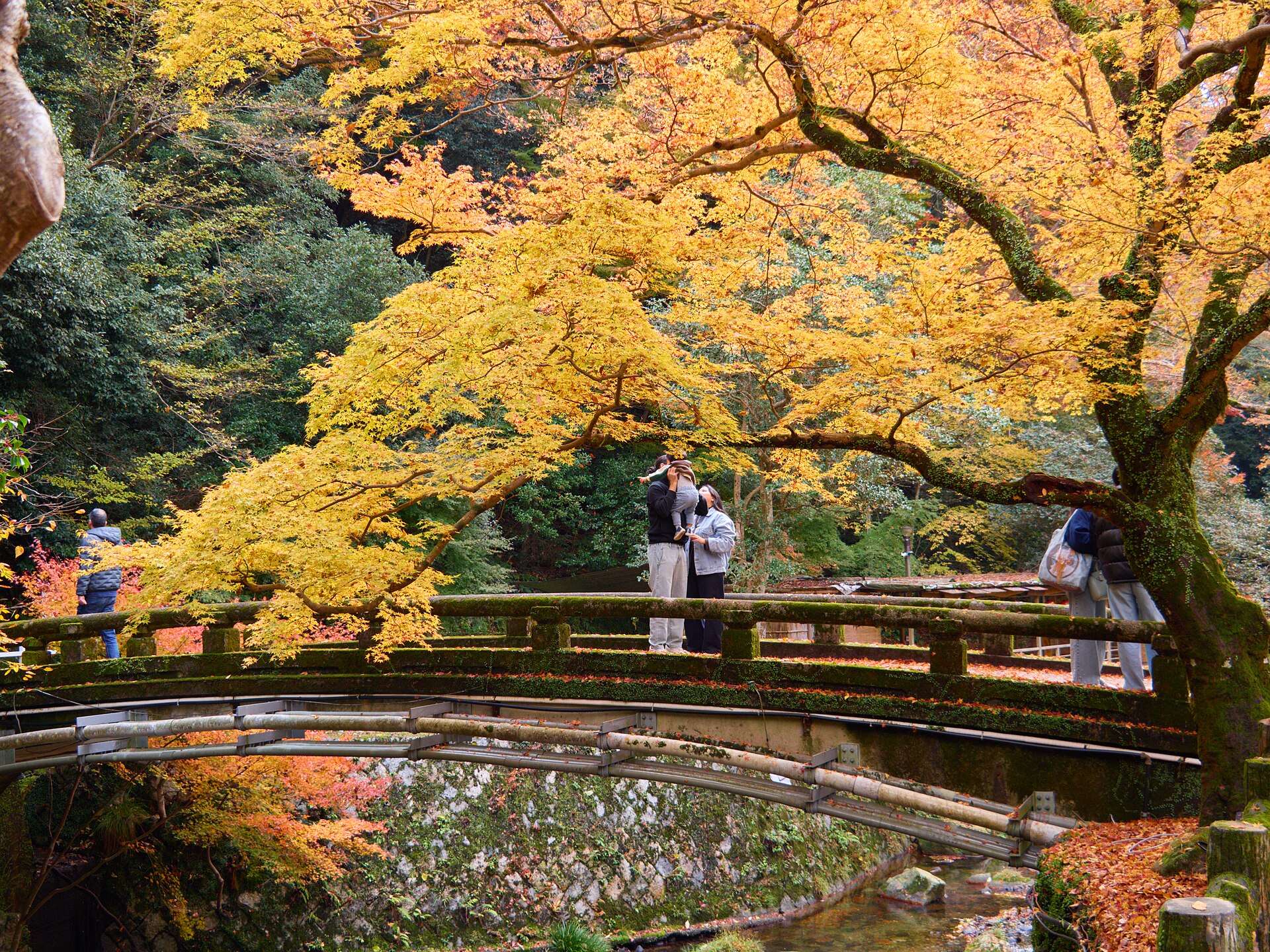
- The walk is the product: 2.8 kilometers of paved riverside path climbing gently through Meiji-no-Mori Minoo Quasi-National Park — maples over the stream, bridges, and the insect museum and Ryuanji temple as waypoints — to the falls at the top.
- Minoo Falls drops 33 meters at the path’s end — the region’s classic cascade, framed by maples that per the alarm make November the procession month and the early-or-midweek rule the crowd answer.
- Momiji tempura is the singular snack: real maple leaves — salted and preserved a year, then battered sweet and fried crisp — sold by the gorge’s competing shops in paper bags, a local tradition the alarm dates honestly to about a century of recipe argument.
- The monkey honesty per the alarm: the wild macaques that once made Minoo famous were managed and relocated up-mountain years ago after feeding conflicts — the warning signs outlived them, sightings on the main path are now uncommon, and food discipline remains polite practice regardless.
- The finish options round it: Ryuanji (Katsuo-ji further into the hills is a separate trip), the small falls-adjacent tea stalls, and the Minoo Onsen spa complex by the station per the alarm’s legs-vote clause — with the whole outing running a half day that pairs with an Osaka afternoon.

Getting there
The Hankyu hop is commuter-simple and the trailhead-at-the-station geometry makes this the network’s lowest-logistics nature walk: no bus, no booking, no gear beyond comfortable shoes. November’s color season per the alarm is the one calendar fact that matters — the first two or three weekends after the leaves turn run at festival density, and the early-start or midweek rule converts the procession back into a walk. The path is stroller-and-mobility friendly by Japanese gorge standards: paved throughout, gently graded, benches at intervals.
The day
The station street’s shops open the momiji-tempura theater immediately — buy a bag from one on the way up and a rival’s on the way down, per the century of argument — then the gorge takes over: the river’s pools and small weirs, the red lacquered bridge at Ryuanji’s steps, the insect museum’s odd charm for the willing, and the canopy closing overhead as the valley narrows. The falls arrive as designed: the 33-meter drop into its bowl, maples leaning in, the viewing plaza’s benches for the sitting and the second tempura bag. The return walk runs downhill-easy with the light now behind the leaves. The onsen by the station settles the alarm’s closing vote — a soak with the gorge in your legs — or the train back to Umeda puts you in Osaka’s evening inside the hour. Paired with a city afternoon, this is the half-day that makes the megacity feel reasonable.
When to go
November is the headline — the maples at full red, the illuminations some evenings, and the crowd rules per the alarm in force. April–May runs fresh green and quiet; June’s rains swell the falls to their loudest; summer offers shade and fireflies at the season’s edge. Winter strips it to bare branches and the emptiest version of the path, tempura shops persisting. Year-round, the first hour after opening-of-day light gets the gorge at its own pace.
Frequently Asked Questions
Are the fried maple leaves actually good?
They’re good the way festival food is good: crisp, sweet-salty batter with the leaf as structure and story more than flavor — and genuinely local, made from a specific maple variety salted and aged for a year before frying. One bag is the experience; the second bag per the itinerary is research into the shops’ century-old argument.
What happened to the monkeys?
Decades of feeding turned Minoo’s macaques into aggressive snack-seekers, and management relocated the troop’s feeding grounds up-mountain from the 1970s onward — the main path now sees them rarely. The alarm’s signs-outlived-them line is the literal situation: obey the no-feeding icons on principle, expect leaves rather than primates.
Is the walk really that easy?
Genuinely: paved end to end, a steady gentle grade, under an hour each way at stroll pace with tempura stops. It’s the rare famous ‘hike’ that welcomes grandparents, strollers, and office shoes — which is exactly why November weekends fill it, per the alarm’s crowd rule.
What’s at the top beyond the falls?
The falls plaza is the day-trip terminus; trails continue up-mountain toward the dam and, by separate approach, Katsuo-ji temple’s daruma-covered slopes — a worthy but distinct outing. Day-trippers take the falls, the tea stall, and the return; hikers with appetite check the trail maps at the plaza.
Minoo or Koyasan from Osaka?
Koyasan (documented on this network) for the mountain monastery world and Okunoin’s cemetery forest — a full committed day; Minoo for the half-day gorge with tempura. Sacred depth versus maple ease — they answer different appetites, and Minoo is the one that leaves your Osaka evening intact.